Interview · Organisation
“Set up a Chinese company, not a Chinese branch.”
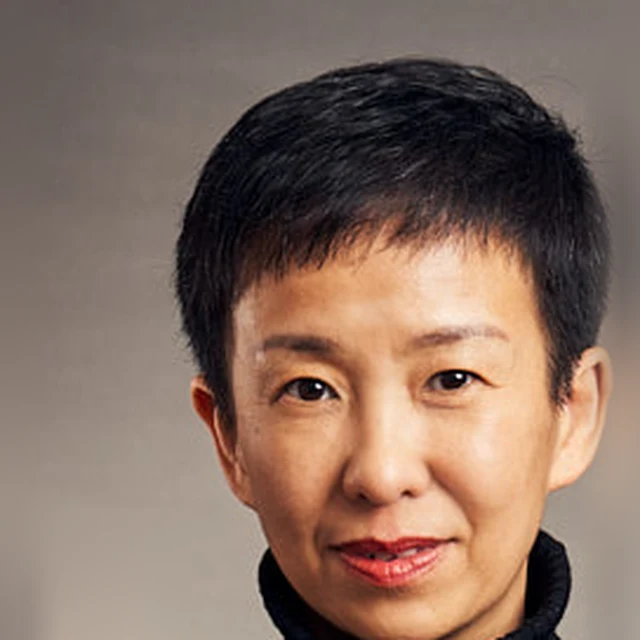
Yong Yan spent more than twenty years inside one French pharmaceutical group in China, rotating through commercial operations, HR, legal, IT, manufacturing and R&D. She is now a partner at JUMO Partners, where she works with the CEOs and HR directors of biotech and biopharma companies on the part of market entry that has no regulatory deadline: the organisation.
A career she describes as “simple but rich”
Simple, because the bulk of it happened in one company. Rich, because inside it she moved across almost every function there is — from sales management to head of HR, and on through general affairs, manufacturing and research.
The jump from commercial to HR was the one that shaped her practice. “I believe it was a brave attempt based on full trust in me from my boss, a French gentleman who really knows China and Chinese,” she says. She became the company's youngest executive. Her conclusion from it has stayed: good leadership is not constrained by functions. And a habit she recommends to anyone building a career in a matrixed company — “I was always trying to think from the General Manager's perspective, no matter what position I was in.”
Why she moved to consulting
A Chinese startup CEO told her: “You have such rich and down-to-earth experiences that we entrepreneurs really need — you should share it with more people to help them.” That, she says, is what decided her.
It also shaped how she works. “Unlike many consultants, my long corporate working experience has convinced me that I can maximise my value to customers only by getting deep into their business and management.” In practice that means annual engagements rather than reports: standing advisory to a CEO and an HR lead, available when the decision actually arrives.
The mindset shift she asks for
Her first recommendation to arriving executives is deliberately uncomfortable: “Forget where you are from — focus on your customers. This is a world where everything is interconnected. In the end it is the product that wins the market, not the country of the producer.”
From which follows the line that has become shorthand for her practice inside JUMO:
I always advise foreign company directors coming to China to have the mindset that they are going to set up a Chinese X company — not X Company's Chinese branch.
What that means concretely, in her words: localise the management team so it can work at Chinese speed and in Chinese style; adapt the business and profit model to the local economic context rather than importing one; build long-term strategic partnerships with Chinese collaborators; and demonstrate commitment by creating value for the society you are entering, not only for the parent company's consolidated accounts.
On the market, and on the distance between the two cultures
She is direct about where multinationals lose ground: “Foreign companies are always at leading positions in R&D of chemical medicines and in global commercialisation. Nevertheless, compared to local companies, MNCs are sometimes conservative and slow in reaction.”
And about the cultural work that makes the rest possible: her own experience across both systems, she says, made it easier to understand the similarities and the differences — and, more importantly, to stay rational when the differences create friction. “I believe this is a key ability to work effectively with cross-cultural people.”
Where this applies
This is the organisation practice.
Team assessment, capability building, joint-venture governance and the deployment of international management standards into a Chinese operating reality — with a partner who has run those functions from the inside.